
Tell us the symptom. We’ve heard it before.
No heat at all, heat in half the house, a bang at 2 AM, a smell you don't trust — every heating failure announces itself. Match yours below, or skip straight to the phone.
Symptom-first
What your system is trying to tell you
No heat anywhere
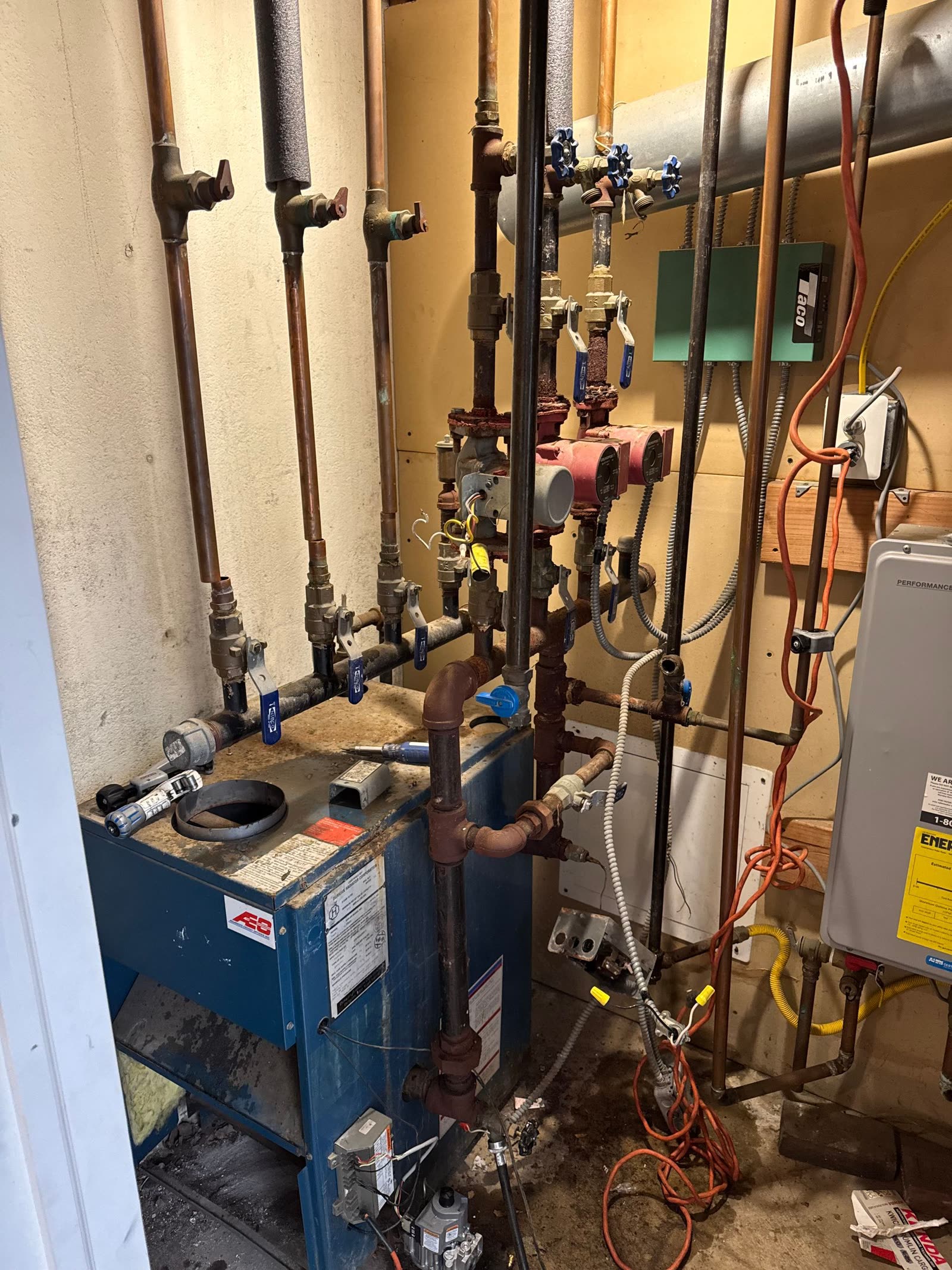
Dead thermostat, tripped safety, failed igniter, or a boiler that locked out on low water. This is the call we prioritize in season — same-day, seven days a week, and the tech arrives carrying the parts that cause most of these: igniters, flame sensors, thermocouples, capacitors, low-water cutoffs.
Heat downstairs, cold bedrooms
On radiator systems that's usually air-bound radiators, a failed vent, or a circulator problem — boiler-side work. On ducted systems it's airflow: a duct or damper issue our sheet-metal crew fixes at the source instead of cranking the blower and hoping.
Banging, clanking, hissing
Steam pipes bang when condensate pools where it shouldn't — a pitch or trap problem, very fixable, very Staten Island. Constant hissing from a radiator vent means the vent, not the boiler. Either way, it's a steam call, and steam is our home turf.
Short cycling — on, off, on, off
Furnaces that start and quit within minutes are usually overheating from starved airflow or a failing flame sensor. It wastes gas, wears parts, and always quits for good on the coldest night. A furnace repair visit catches it early.
A smell you don't like
Dust burning off at first fall startup is normal for an hour. Gas smell is not: leave the house, call National Grid at 718-643-4050 and 911 first, then us for the repair. Never wait on a gas smell.
The honest escalation
If the fix costs more than the equipment is worth, we say so with numbers on paper — and the decision stays yours. Replacement paths: boilers, furnaces, heat pumps.